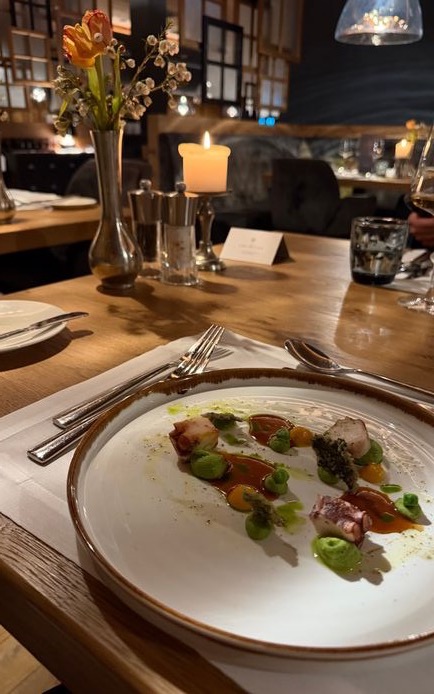
A love letter to restaurants built into hillsides, pendant lights shaped like peaks, and lingering over wine as the sun moves across the valley.
The restaurants that stay with you
City restaurants with industrial lighting and small plates. Beach restaurants with sand underfoot and fish still smelling like the sea. But the restaurants that linger in memory - the ones that surface months later - are almost always in the mountains.
What makes mountain dining different
It’s not just the food, though the food is often extraordinary. It’s the setting. The way the dining room is positioned so every table has a view. The way the light changes during a meal - golden when you sit down, blue by the time dessert arrives. The way the silence outside makes conversation feel more intimate.
There’s also something about altitude that makes food taste better. No scientific evidence for this claim, but it stands.
A meal worth remembering
Last month, in a restaurant carved into the side of a hill in Austria, a meal unfolded that’s still hard to shake. The room was warm wood and candlelight. The windows were floor-to-ceiling, looking out over a valley that was slowly filling with dusk.
The first course was something with local trout - delicate, barely there, like the chef was whispering. Then came a venison dish that was the opposite: bold, rich, unapologetic. The wine was Austrian, naturally, and the sommelier talked about it like she was introducing an old friend.
By the time the Kaiserschmarrn arrived - torn, golden, dusted with sugar and served with plum compote - the valley outside had gone completely dark, and the only lights visible were from distant farmhouses.
Why the mountains keep calling
Mountain restaurants understand something that city restaurants often forget: a meal is not just food. It’s time, place, company, and light. It’s the walk you took to get there and the feeling you carry when you leave.
The best ones don’t try to compete with the view. They frame it.